

The moment your storefront breaks the promise
Two case studies. Two completely different brands. One reason they were both losing sales they’d already earned.

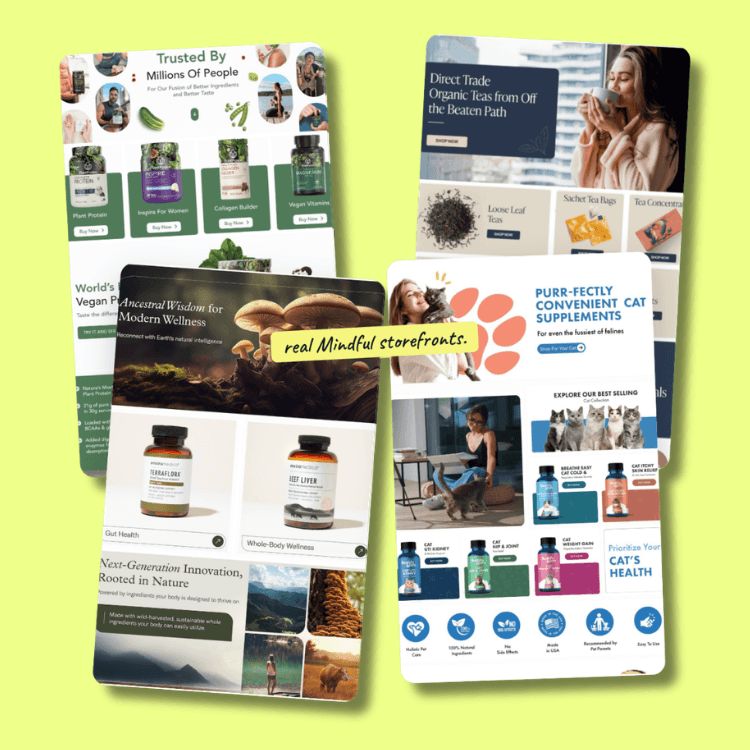
A TikTok creator working with one of our clients sent an unexpected message.
Not asking for a bigger deal.
Not pitching a new idea.
Pointing out a problem…
“We’re doing everything right on our end,” she said. “We’re driving real people to your Amazon listings. But when they get there, your brand doesn’t look like what we’ve been selling.”
She had a financial stake in this. She earns affiliate commissions when Amazon sales happen. So when the storefront wasn’t converting, she had a very direct reason to notice — and eventually, to say something.
The brand was JIYU, a premium K-beauty skincare line. Their TikTok strategy was working. Creators were building real audiences, driving real traffic to Amazon.
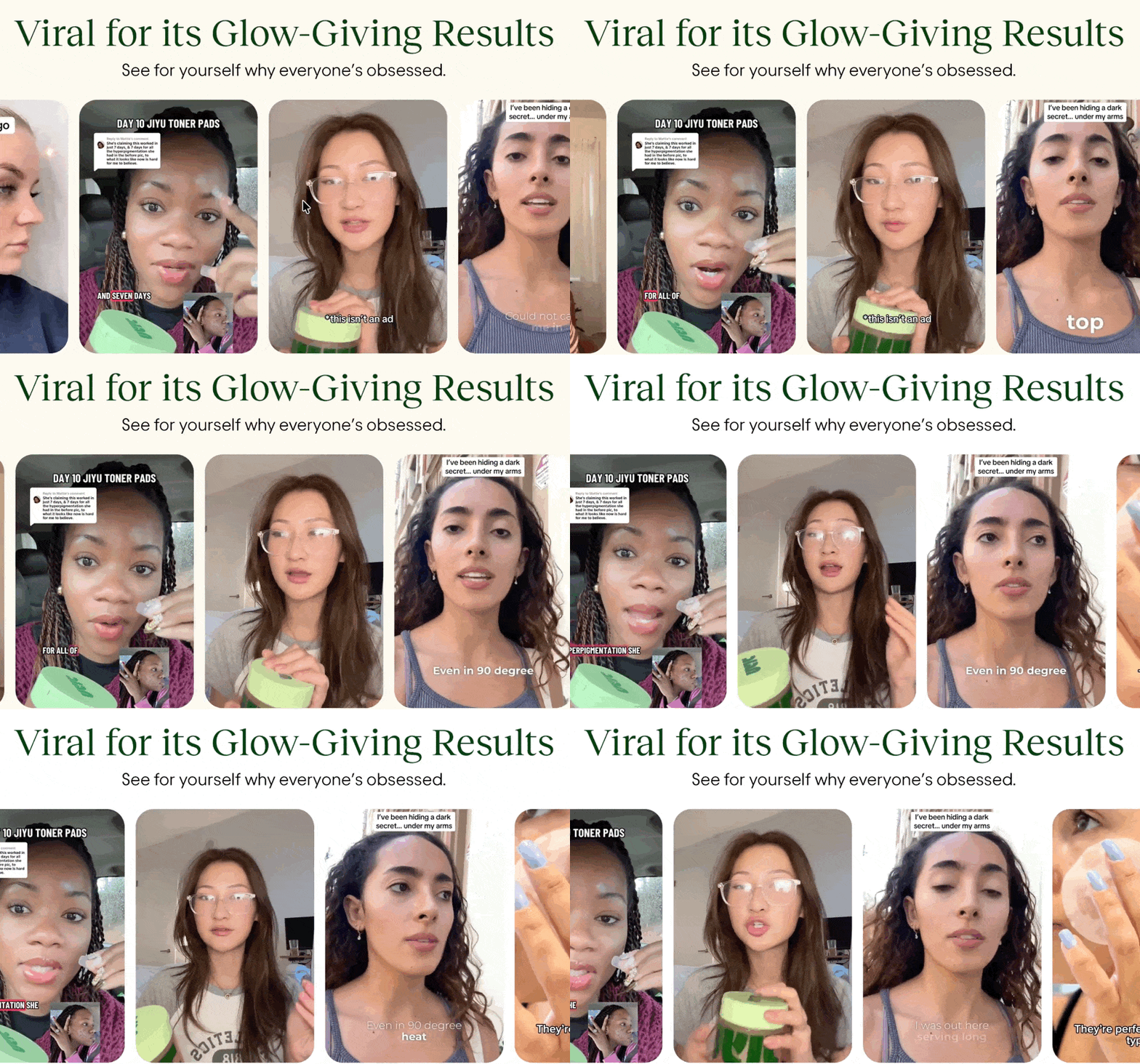
The product was legitimate. The pricing was premium. The demand was there.
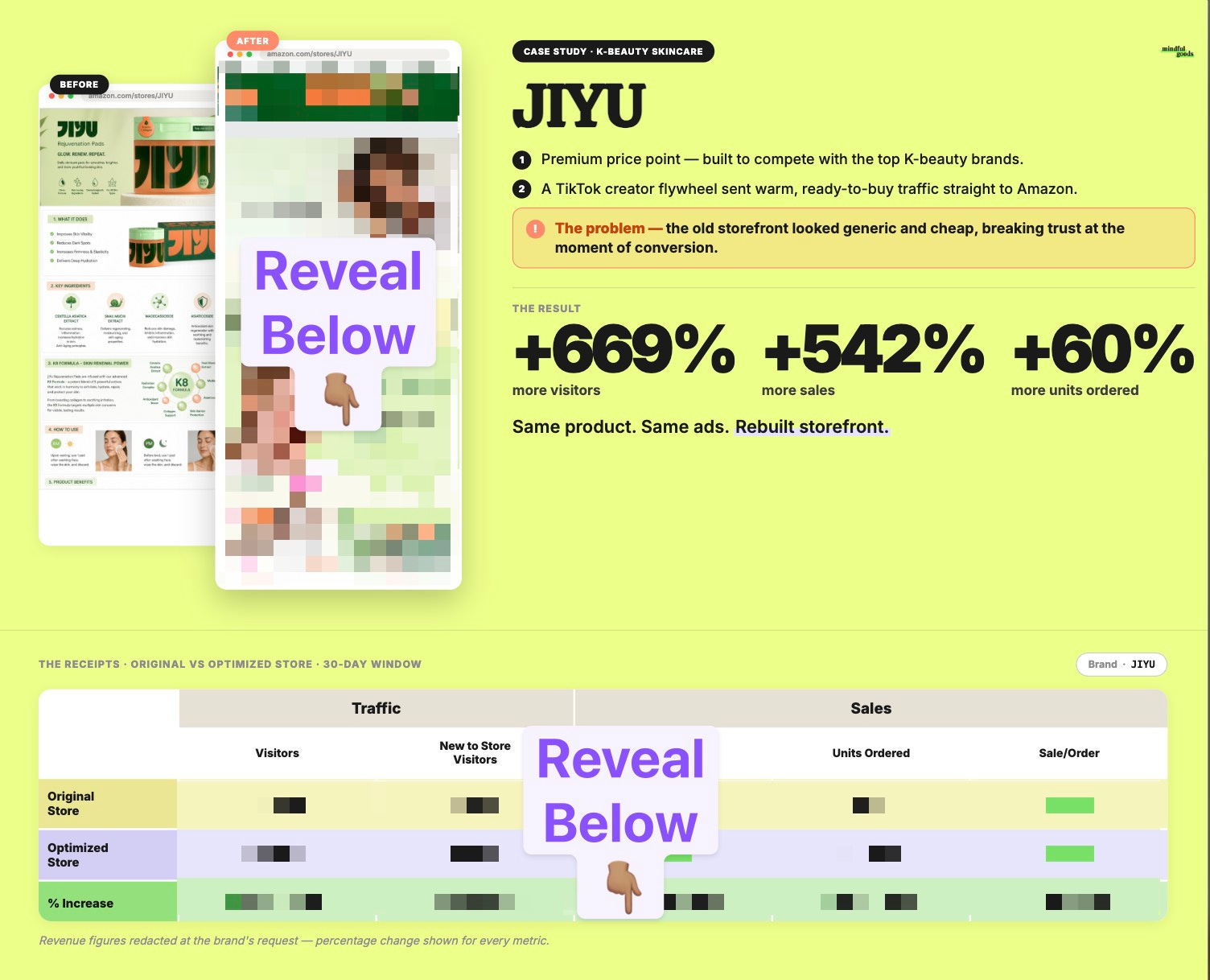
But the storefront looked nothing like the brand those creators had been presenting. The imagery was generic. The copy was flat. The visual language whispered “budget” while the price tag said “premium.”
Shoppers arrived already interested. TikTok had done the hard work of capturing their attention, educating them, building desire.
But the Amazon storefront broke the deal at the exact moment it needed to close it.
After we rebuilt the JIYU storefront: 669% more visitors. 542% more sales.
The second brand is different from JIYU in almost every way.
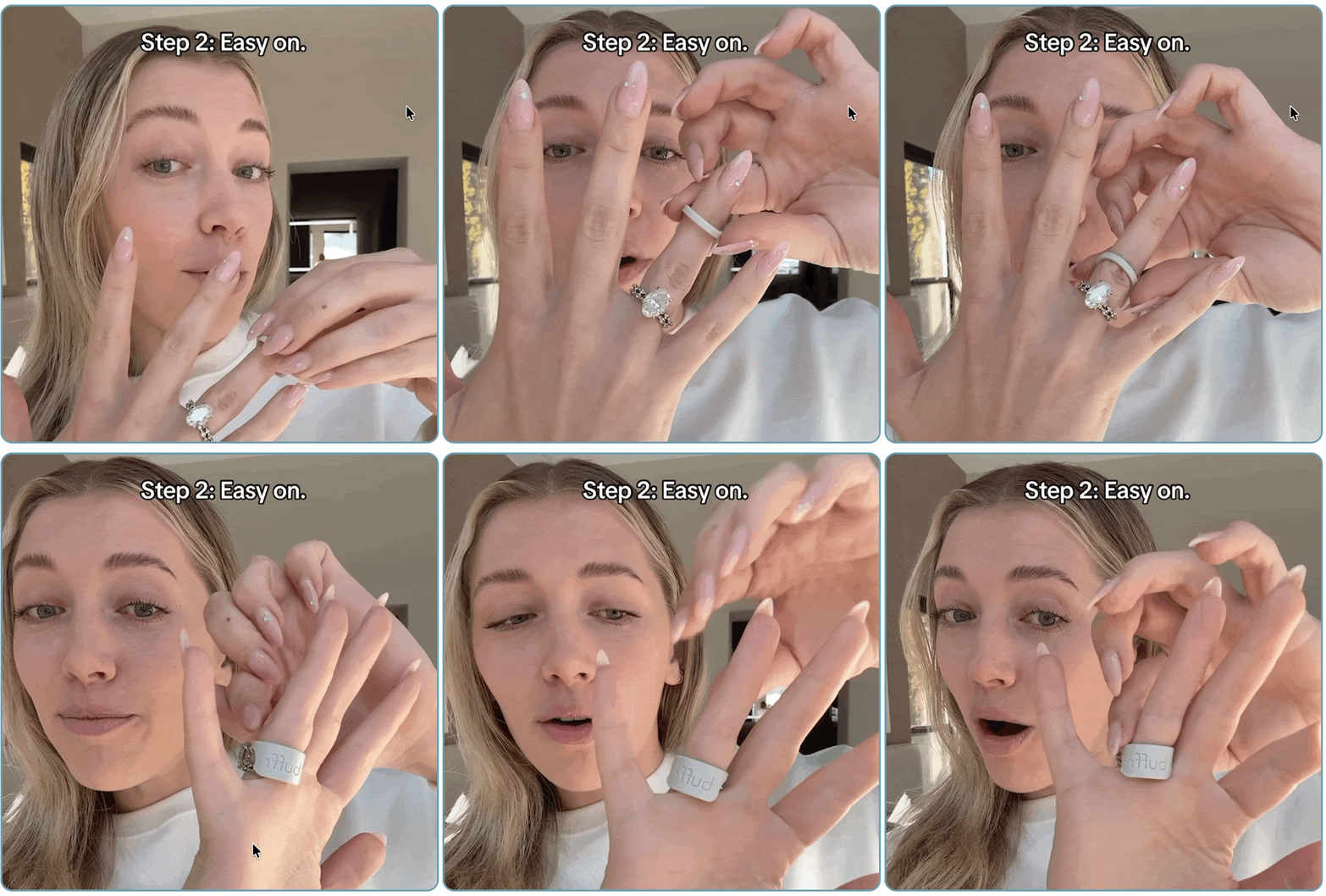
The Buffr makes a silicone ring protector
A small sleeve that fits over your wedding ring at the gym, so you never have to take it off.
It’s a niche product. No TikTok army. A founder-led business that had validated product-market fit but hadn’t cracked high-volume traffic yet.
Here’s what makes this product compelling once you understand it: that little piece of silicone is protecting one of the most valuable pieces of jewelry most women will ever own. Most women who wear a wedding ring to the gym have a real anxiety about it — the scratch risk, the theft risk, the weight of what that ring represents.
A storefront that converts for this product has to do one thing before anything else: make the right shopper feel immediately seen.
She needs to recognize herself and her life in the brand.
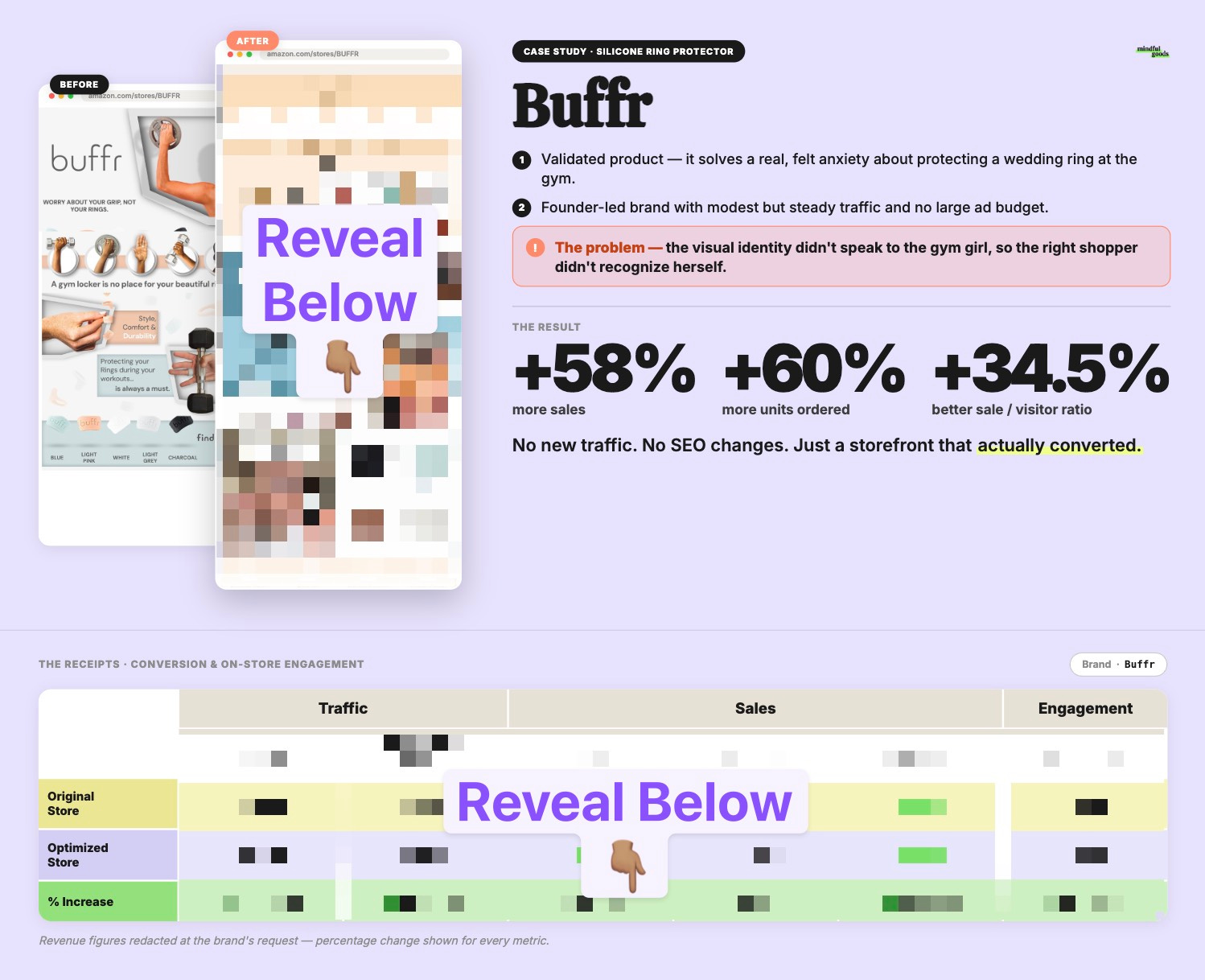
Buffr’s storefront wasn’t doing that. The visual aesthetic was generic. The brand language didn’t speak to the gym girlie. The story — I protect the things that matter to you — was nowhere in the creative.
After we rebuilt it: 58% more sales, 60% more units ordered, 34.5% improvement in sale/visitor ratio.
With roughly the same traffic.
This is the detail I come back to in almost every conversation about storefronts.
Buffr’s result makes the case cleanly because there’s no other explanation for it. We didn’t touch the SEO. We didn’t change the ad strategy. We didn’t do anything that would drive more sessions to the page.
We just made the storefront do its actual job. And sales jumped 58%.
Most brands I talk to assume their storefront problem is a traffic problem.
More sessions = more sales. That’s not wrong — but it’s incomplete.
The key learning here: Traffic is only half the equation. The other half is what happens to a shopper after they arrive.
The common denominator between JIYU and Buffr isn’t their product, their category, their price point, or their marketing channel.
What they shared was a storefront that couldn’t complete the psychological journey a shopper needs to take before they buy.
We call that journey the Trust Ladder.
Every shopper who arrives at a storefront goes through the same sequence before they’re willing to add something to cart. Their attention has to be captured — quickly, or they leave. They need to understand what you offer and why it matters for them specifically. They need to trust that your brand is legitimate. And they need their last doubts removed before they hit Buy.
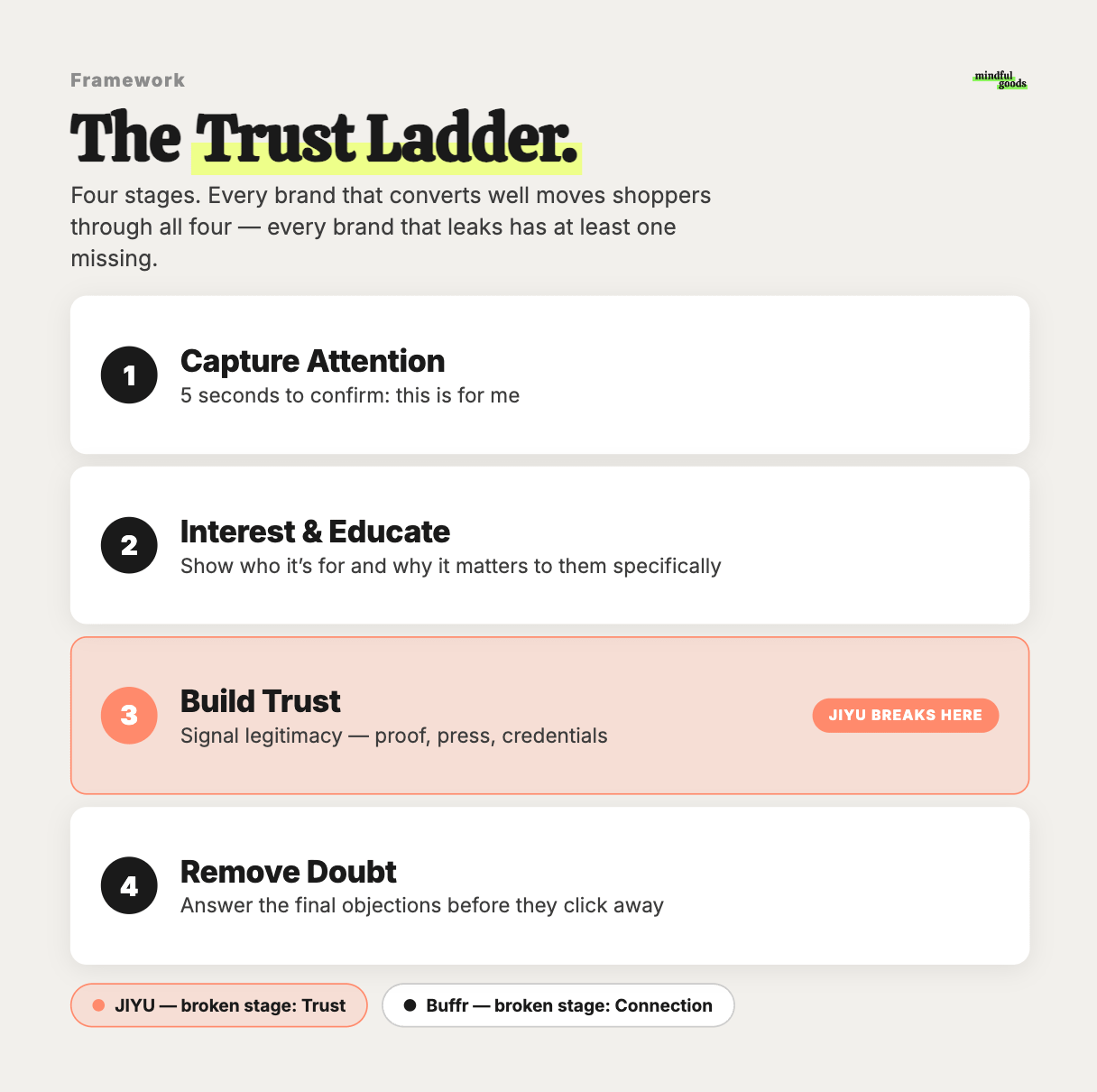
Four stages. Every brand that converts well moves shoppers through all four. Every brand that leaks has at least one stage missing.
For JIYU, the broken stage was trust. Shoppers arrived with their attention and interest already primed — TikTok had done that work upstream. But the storefront looked like a different, cheaper brand than the one they’d been watching. Trust broke on arrival.
For Buffr, the broken stage was connection. Shoppers arrived without strong brand context, and the storefront didn’t give them one fast enough. The right woman didn’t recognize herself. The story wasn’t told in a way that resonated.
Both brands had products worth buying. Neither had a storefront that completed the sale.
🔒 Now Let’s Get To The Good Stuff
Upgrading to paid is like getting the version of my brain that isn’t filtered for a general audience. Less than one Starbucks order per week, and you get the strategy I charge clients real money for — broken down so you can use it yourself.
Below the paywall:
The annotated breakdown of all eight elements, showing exactly what was missing in each brand’s original storefront, what we changed, and why.
BONUS: Claude prompt to run this audit on your own storefront in about 2 minutes. +any previous Claude hacks + prompts I’ve shared.
The entire archive of every paid post I’ve ever written, instantly unlocked
Bonus resources, secret tool stacks, and behind-the-scenes tea I don’t share on my other social.
